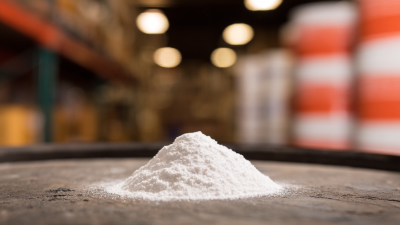
Water Retaining Admixture really is a game-changer in modern construction—it helps make concrete last longer and perform better. As folks around the world look for dependable solutions, companies need to be flexible and adjust their products to fit all kinds of needs. Innovation in this area is pretty much essential, especially when contractors and builders face new challenges every day.
Big players like BASF, Sika, and CEMEX are pouring resources into research to make these water-retaining formulas even more effective. It's also super important to think about how these solutions impact the environment. Striking that perfect balance between performance and sustainability isn’t always straightforward, and exploring these solutions often reveals gaps in what’s currently available.
If you're in the market for these admixtures, it pays to carefully weigh your options. The right water retaining admixture can really make a difference in your project's success. But heads up—not all products on the market meet the industry standards, so making an informed choice is key. Remember, what you pick now can have long-lasting effects on the quality of your construction and the costs down the line.
Water retaining admixtures are crucial in construction. They enhance the performance of concrete by improving its ability to retain moisture. This property is vital for the hydration process, leading to stronger and more durable structures. In areas with limited water resources, these admixtures become even more significant. They promote sustainable practices in construction, addressing environmental concerns.
The technology behind water retaining admixtures has evolved. Nowadays, they incorporate advanced polymers and natural substances. This evolution raises questions about performance consistency and long-term reliability. Contractors often struggle with selecting the right mix for their specific projects. The balance between cost and effectiveness can be tricky, as not all solutions perform equally across different conditions.
These admixtures can sometimes lead to unexpected results. For instance, excessive water retention may cause delayed setting times. This can disrupt project timelines. However, when applied correctly, they can significantly enhance concrete quality. Continuous research and development in this field are essential. It ensures the delivery of improved products that meet the needs of modern construction. The complexities of material science in this area demand attention and careful consideration from builders.
Water retaining admixtures play a pivotal role in enhancing the performance of concrete. These compounds significantly improve water retention, which is crucial for hydration during the curing process. The effectiveness of an admixture can be determined by several key properties.
One important property is the ability to create a moisture-retentive gel. This gel forms a protective barrier, minimizing evaporation and ensuring that water remains available for the hydration of cement. It contributes to the overall durability and strength of the concrete. Additionally, a good water retaining admixture should be compatible with various cement types, ensuring a uniform mixture.
Tips for selecting the right admixture include checking data sheets for performance metrics and recommended dosages. Always consider the environmental conditions of the site. High temperatures can increase evaporation rates, making water retention essential.
Keep in mind that while many products tout superior features, independent testing can provide valuable insights. Users should reflect on their specific needs before making a commitment. Different projects may necessitate different characteristics in admixtures.
Thorough evaluation of potential options can lead to more informed decisions. Collaboration with experienced professionals can further enhance understanding of what works best in varying conditions.
Water retaining admixtures play a crucial role in enhancing the performance of construction materials. These solutions help improve water retention in concrete and mortar, leading to better durability and longevity. Various manufacturers are leading the way in this niche, providing innovative and reliable products across global markets.
Choosing the right supplier can be challenging. It’s essential for buyers to evaluate products based on technical specifications and real-world applications. For instance, consider the types of projects you’re involved in. Research how different admixtures perform under specific conditions like temperature and humidity. Be aware that not all products suit every building type.
Tips for selecting water retaining admixtures: Look for manufacturers with a strong track record. Read reviews and seek feedback from professionals. Testing samples before bulk purchasing can save unforeseen issues later. A practical approach is to understand your project requirements deeply. Ensure the admixtures align with your expectations for performance and sustainability. Always keep an eye on the evolving technologies in this field.
The market for water retaining admixtures is evolving rapidly. Increasing urbanization and climate change are major drivers of this change. A recent report from Transparency Market Research indicates that the global water retaining admixture market is expected to grow at a CAGR of 7.2% from 2022 to 2030. This rapid growth highlights a crucial need for innovation in formulation and application techniques.
Sustainability is a key concern. Producers must focus on environmentally friendly solutions. Increasing regulations regarding construction materials are prompting manufacturers to develop greener options. The demand for higher durability and efficiency in construction projects is also rising. Even though advancements are made, data shows many current solutions still fall short of meeting all industry standards.
The shift toward smart construction is undeniable. Smart technologies and digital tools can enhance the effectiveness of water retaining admixtures. However, the integration of these solutions remains a challenge. Industry experts suggest that collaboration among stakeholders can bridge the gap. Innovative partnerships may lead to improved formulations that meet today's demanding standards while addressing environmental concerns. Sharing insights and experiences could prove vital for the future of this market.
Water retaining admixtures play a crucial role in various industries, enhancing the efficiency of water retention in construction materials. These admixtures improve the durability and workability of concrete, making them essential for long-lasting structures. According to the "Global Water Retaining Admixture Market Report 2022," the demand for these solutions is expected to grow significantly, driven by the construction boom in developing regions.
In agriculture, water retaining admixtures assist in soil moisture management. These materials can help retain water for longer periods, leading to improved crop yields. A study published in the "International Journal of Agronomy" found that using such admixtures can increase water availability in arid conditions by up to 30%. This is vital for regions facing water scarcity.
Tips: When choosing a water retaining admixture, consider the specific application. Each industry has unique requirements that can affect performance. Testing the admixture in small batches before full application can help identify any compatibility issues early on. Proper evaluation is key to achieving desired outcomes. Use these materials thoughtfully to ensure sustainability and effectiveness.
Water retaining admixtures play a crucial role in construction, enhancing the durability and sustainability of concrete. These materials improve water retention in mixtures, resulting in less water waste. However, the sustainability of these admixtures often raises questions. Are they truly eco-friendly?
Many experiments show that different formulations can impact environmental performance. Some use natural ingredients, while others rely on synthetic components. It's essential to assess the life cycle of these products. How they are sourced, manufactured, and disposed of matters. Select admixtures that prioritize renewable resources. This focus not only benefits the environment but also aligns with global sustainability goals.
Despite advancements, challenges remain. The industry's reliance on certain additives may lead to environmental concerns. There is room for improvement in developing fully sustainable options. Innovative research could drive the creation of admixtures that enhance performance without compromising our planet's health. Seeking collaboration between scientists and construction professionals is essential for achieving this goal.
Water retention technologies are evolving rapidly. As the world faces increasing drought conditions, innovative solutions become essential. According to a recent report by the International Water Resource Association, effective water retention admixtures can reduce evaporation losses by up to 25%. This advancement is crucial, especially in agriculture, where water scarcity threatens crop yields.
Recent developments emphasize sustainable materials. Biodegradable options are preferred for reducing environmental impact. A study from the Global Water Innovation Forum indicates that these new products can maintain soil moisture for longer periods. However, many formulations still struggle with consistency in performance. This unpredictability needs further research and testing to establish reliability.
Investments in research are vital. The Markets and Markets report projects a 15% growth in the global water-retaining admixture market by 2026. As technologies improve, accessibility for global buyers must also be addressed. Training and resources are essential. Both producers and consumers can benefit from enhanced understanding and implementation of these admixtures. Despite progress, challenges remain in ensuring uniformity in application and effectiveness across diverse climates.
| Solution Type | Composition | Water Retention (%) | Application Area | Environmental Impact | Cost (per ton) |
|---|---|---|---|---|---|
| Polymer-based | Acrylic Copolymers | 75% | Concrete, Mortar | Low | $200 |
| Natural Fiber | Cellulose | 70% | Agricultural Soils | Very Low | $150 |
| Nano-materials | Silica Nanoparticles | 80% | Advanced Concrete | Moderate | $350 |
| Superabsorbent Polymers | Cross-linked Polyacrylate | 90% | Landscaping, Agriculture | Low | $250 |
| Bio-based Admixtures | Starch Derivatives | 65% | Eco-friendly Construction | Very Low | $180 |
Sodium naphthalene sulfonate formaldehyde (FDN), commonly known as a naphthalene-based superplasticizer, plays a pivotal role in enhancing concrete performance by improving workability and strength. This light brown powder is synthesized through complex chemical processes including sulfonation, hydrolysis, and condensation. As industry reports suggest, the utilization of FDN allows for the effective preparation of high-strength and durable concrete, which is essential in modern construction practices. Concrete mixtures incorporating FDN exhibit a significant reduction in water content while maintaining the same workability, making it particularly advantageous for applications requiring superior strength and impermeability.
Recent studies emphasize that the inclusion of FDN in concrete formulations can lead to improved compressive strength by facilitating better particle dispersion and minimizing segregation. This property is critical for various concrete types, such as steam-cured, waterproof, and fluid concrete. Furthermore, the adoption of standards addressing the quality of sodium naphthalene sulfonate formaldehyde helps ensure consistency and reliability in construction projects. Reports also indicate that the impact of FDN extends beyond concrete, with applications in the leather, textile, and dye industries as a dispersant, showcasing its versatility. By adhering to industry standards and leveraging advanced formulations, FDN continues to be a valuable asset for improving concrete performance in diverse construction applications.
: They enhance water retention in construction materials, essential for durable structures.
They improve soil moisture management, increasing water availability for crops in arid regions.
Yes, they improve water retention in mixtures, leading to less water waste during construction.
Not necessarily; various formulations exist, some using natural ingredients and others synthetic.
Evaluate the specific application and test small batches for compatibility before full use.
The sourcing, manufacturing, and disposal of these products can impact their environmental performance.
Yes, innovative research is needed to create more sustainable options without sacrificing performance.
Current reliance on certain additives may lead to environmental concerns that need addressing.
Collaboration between scientists and construction professionals is essential for progress.
It helps achieve desired outcomes and ensures both effectiveness and sustainability in applications.
Water Retaining Admixtures are crucial in modern construction, designed to enhance the durability and performance of concrete by retaining moisture. This article provides an overview of their key properties, such as improving workability and extending curing times, which are vital for various applications across different industries, including infrastructure and landscaping.
The global market for Water Retaining Admixtures is influenced by several trends, including the growing emphasis on sustainable construction practices. As manufacturers innovate to create effective and environmentally friendly solutions, the future of water retention technologies looks promising, with continuous developments expected to address the increasing demands for higher efficiency and eco-friendly materials. Overall, the significance of Water Retaining Admixtures in enhancing construction quality while contributing to sustainability cannot be overstated.