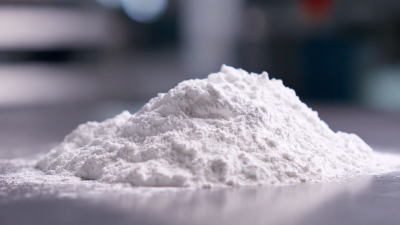
You know, in the construction world, the role of a good HPMC Powder Factory really can't be overstated. HPMC, or Hydroxypropyl Methylcellulose, is this pretty handy additive used in all sorts of building materials. It helps make mortars and plasters easier to work with and more stable. Plus, its moisture-retaining properties boost adhesion and help prevent cracks from forming once everything's dried.
Picking the right factory for HPMC powder is actually a pretty big deal — it can really make or break your project. You want a place that keeps quality control tight because if not, the quality might be all over the place. Sadly, not every factory has the same standards; some might skip thorough testing, which leads to inconsistent products.
In an industry that's all about efficiency and durability, you just can't overlook the benefits HPMC brings to the table. Factories that focus on innovation and sustainability really stand out from the crowd. As we go over the top perks, it's worth thinking about how these factors actually contribute to the success of your project overall.
HPMC powder, or hydroxypropyl methylcellulose, offers significant advantages in building materials. It improves workability, enhancing the ease of mixing and application. This leads to smoother finishes, which are essential for modern construction. Additionally, HPMC retains water. This property allows for extended open time during application. Workers can correct mistakes without rushing.
Furthermore, HPMC helps adhesives and mortars bond better. It increases adhesion to various substrates. Some projects may face challenges with adhesion in humid environments. HPMC counteracts this issue effectively. On the flip side, over-reliance on additives can complicate mixes. Construction professionals need to find a balance.
Moreover, HPMC acts as a thickening agent. It ensures that materials remain stable throughout their use. If not monitored, the dosage may lead to inconsistencies. The focus should remain on the properties needed for a particular application. In conclusion, HPMC's role in construction materials is valuable, but understanding its limitations is crucial.
HPMC (Hydroxypropyl Methylcellulose) powder plays a vital role in the construction industry, particularly in cement-based mixtures. It is known for improving the workability of these mixtures. This enhancement allows for easier mixing and application. HPMC increases the flexibility of the mixture, which can lead to fewer cracks. Contractors often notice that projects proceed more smoothly when HPMC is included.
Adding HPMC helps retain water in the mixture, allowing it to maintain moisture longer. This characteristic can be critical in hot environments. However, balancing the amount of HPMC can be tricky. Too much can lead to a sticky mess, making application challenging. Finding the right ratio is an ongoing process for many builders.
Incorporating HPMC also affects the strength of the final product. Some builders report improved adhesion, which is beneficial. Yet, the effectiveness can vary based on other materials used and environmental factors. Adjusting the formulation requires careful consideration. Missteps can lead to compromised performance or unexpected results.
HPMC, or Hydroxypropyl Methylcellulose, plays a crucial role in the construction industry. Its ability to retain water is one of the standout benefits. Research indicates that HPMC can improve water retention by nearly 30%. This property is vital for achieving optimal hydration in cementitious mixtures. Proper hydration leads to better curing, thereby enhancing strength and reducing the chances of cracking in concrete.
Concrete cracking can lead to significant structural issues. According to industry studies, up to 60% of concrete surfaces experience some form of cracking. HPMC can mitigate this problem by improving the plastic properties of the mix. When used correctly, it forms a consistent paste, reducing the risk of shrinkage cracks during drying. Without HPMC, many projects rely on additives that may not be as effective in maintaining moisture levels.
However, not all applications have optimal results. Overuse of HPMC can lead to workability issues. Sometimes, blends with too much HPMC become overly thick and difficult to apply. It's essential to strike a balance. The construction industry continues to challenge these formulations, aiming for the best performance while minimizing waste and maximization of resources.
HPMC powder, or Hydroxypropyl Methylcellulose, plays a vital role in the construction industry. It is a key additive in mortar formulations. Its composition enhances adhesion, making mortars stronger and more durable. When mixed with cement, HPMC modifies the properties of the paste. This results in improved workability and application.
HPMC contributes noticeably to the adhesion of mortar to various surfaces. It creates a robust bond between the mortar and substrates like bricks or tiles. Enhanced adhesion reduces the risk of cracks and failures. Construction projects benefit from fewer repairs, saving time and money. However, the effectiveness of HPMC can vary. Improper mixing or incorrect dosage might weaken the mortar. This requires careful consideration during formulation. The environment also plays a role. Humidity or temperature can affect HPMC’s performance.
Many contractors rely heavily on HPMC powder. Still, some find it challenging to optimize its use. Mixed reviews exist regarding its application processes. Learning from these experiences can lead to better outcomes. Embracing HPMC in construction is promising but demands attention to detail.
HPMC powder, or Hydroxypropyl Methylcellulose, plays a vital role in sustainable construction. Its use in various applications can enhance the efficiency of building materials and promote eco-friendly practices. This compound is biodegradable, making it a better alternative to many traditional additives. Using HPMC reduces waste and minimizes the carbon footprint.
In construction, HPMC improves water retention in mortars and plasters. This leads to effective bonding and reduces the need for water, which is often scarce. Furthermore, HPMC can lower energy consumption during the application process. When used in tiles or adhesive products, it allows for longer working times without compromising performance. However, some might overlook the small adjustments required when using HPMC, such as mixing techniques or drying times.
Its versatility also extends to various construction methods, including green building approaches. Yet, the perception of HPMC’s benefits sometimes requires education. Misunderstandings can lead to its underutilization in projects focused on sustainable practices. These factors warrant a closer look by industry professionals. They need to embrace new materials for a greener future while being open to learning from implementation challenges.
This chart illustrates the top 10 benefits of using Hydroxypropyl Methylcellulose (HPMC) powder in construction applications, emphasizing its significance in promoting sustainability and enhancing construction quality.
Hydroxypropyl Methylcellulose (HPMC) plays a pivotal role in the construction industry, particularly regarding drying time and curing processes. This polymer aids in controlling the moisture content during different construction stages. By enhancing the water retention of cementitious materials, HPMC ensures that the mix remains workable for longer. Proper moisture control is crucial, as it directly influences the strength and durability of structures.
The drying time of materials like mortar and concrete is significantly impacted by the presence of HPMC. With optimal water retention, these materials dry at a steady rate. Rapid drying can lead to cracks and weakened structures. In addition, HPMC affects the curing process. It slows down the evaporation of water from freshly applied layers. This ensures that the curing happens uniformly, avoiding potential issues with uneven strength.
However, there can be challenges in using HPMC. Incorrect dosages may lead to undesired workability. Too much HPMC can create a sticky mixture, while too little may cause quick drying. Each project requires careful consideration of environmental factors. Balancing HPMC concentration with local climate conditions is essential. Building professionals must remain vigilant and adjust their usage accordingly for optimal results.
HPMC powder, a cellulose derivative, plays a crucial role in large-scale construction projects. Its cost-effectiveness stands out in the construction sector. According to a recent industry report, using HPMC can reduce overall material costs by approximately 15% in specific applications. This cost reduction is significant, especially in projects with tight budgets.
Moreover, HPMC powder improves the workability of construction materials. It enhances the binding properties of mortars and plasters. A study found that adding HPMC can increase the adhesive strength by up to 20%. This leads to fewer repairs and reduced waste. However, the reliance on HPMC requires careful evaluation. Not all projects may benefit equally from its properties.
Environmental impact is another concern. While HPMC offers flexibility and improves efficiency, its production process has ecological implications. It is essential to weigh these factors against potential savings. Additionally, some contractors may experience variability in performance based on the source of HPMC. Thus, consistent quality assurance is vital in maximizing its benefits. The construction industry must continue to assess these variables to ensure optimal use of HPMC powder in future projects.
Hydroxyethyl Methyl Cellulose (HEMC) has become a key ingredient in various construction applications, particularly in wall putty formulations. Its unique properties facilitate superior water retention and extend the working time of mortar, making it a vital component in both cement and gypsum-based products. The incorporation of HEMC in drymix mortars significantly enhances the performance under challenging conditions, such as high temperatures, ensuring consistent application quality.
Developed to meet specific mortar requirements, HEMC exhibits excellent construction performance, which is crucial for achieving optimal results in thin plastering applications. Products like HEMC P3055 stand out due to their higher gelling temperatures that allow for improved workability and bonding strength. As the demand for advanced building materials continues to rise, modified cellulose ethers like HEMC are playing an increasingly important role in improving the economic effectiveness of construction projects, providing a reliable solution for both contractors and builders.
: HPMC powder stands for hydroxypropyl methylcellulose. It improves workability in building materials.
HPMC enhances adhesion by modifying mortar properties. It creates stronger bonds with various substrates, reducing crack risks.
HPMC controls moisture content. It ensures steady drying rates, preventing cracks and weakened structures.
Yes, improper dosage can lead to inconsistencies. Monitoring the amount used is crucial for desired results.
Over-reliance or incorrect mixing of HPMC can complicate mixes. Each project requires careful attention.
HPMC performance varies with environmental factors. Humidity and temperature can influence its effectiveness.
HPMC slows water evaporation, ensuring uniform curing. This is essential for achieving strength and durability.
Finding a balance in HPMC usage is vital. Too much can create stickiness; too little can lead to quick drying.
Contractors should learn from mixed reviews. Optimizing HPMC use is key for successful construction projects.
Each application needs attention to detail. Consider project requirements and environmental conditions for best results.
HPMC powder is increasingly recognized for its benefits in the construction industry, playing a vital role in enhancing building materials. The advantages of HPMC include improved workability of cement-based mixtures and significant water retention, which minimizes cracking during the curing process. In addition, HPMC powder contributes to better adhesion in mortar, ensuring durable constructions. The use of HPMC is not only beneficial for performance but also supports sustainability efforts in construction applications by reducing waste.
Moreover, HPMC powder factory operations enable cost-effective solutions for large-scale construction projects. By optimizing drying times and streamlining curing processes, HPMC enhances overall efficiency, ultimately leading to significant cost savings. The comprehensive advantages of HPMC powder highlight its essential role in modern construction practices, making it a valuable resource for builders and contractors alike.