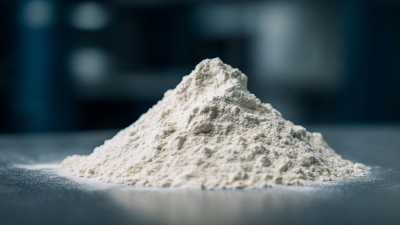
Hydroxy Ethyl Cellulose, or HEC for short, is this really handy polymer that's used across a bunch of different industries. Its special qualities make it a go-to additive when it comes to manufacturing. In fact, in this quick intro, I want to highlight the top ten ways HEC is making a difference worldwide – showing just how important it’s become.
Take construction, for example. HEC helps out as a thickener in cement and mortar mixes. It’s great because it makes things easier to work with and stops the materials from separating. Then there’s the coating world – HEC really shines here, thanks to its ability to form a nice film. Paints and coatings stick better and have a smoother flow when you add HEC.
But it doesn’t stop there—also, in personal care products, HEC is super helpful for keeping things stable and giving creams and lotions that lovely smooth texture we all love. Plus, pharmaceutical companies use it as a binder in tablets, making sure the medicine releases properly and the dosage stays consistent. Of course, like with anything, there are hurdles—finding top-notch HEC can sometimes be tricky. Still, overall, Hydroxy Ethyl Cellulose continues to be a real game-changer in driving innovation across many manufacturing fields.
Hydroxy Ethyl Cellulose (HEC) is a versatile polymer used extensively in manufacturing. Its water-soluble nature makes it an essential ingredient in various formulations. HEC acts as a thickener, stabilizer, and emulsifier in different industries. This adaptability contributes significantly to product quality and performance.
In the construction sector, HEC enhances the workability of cement and gypsum-based products. It improves adhesion and retains moisture, leading to better curing processes. In the pharmaceutical industry, HEC plays a crucial role in drug delivery systems. It helps control the release of active ingredients, ensuring effective treatments. Its biocompatibility and non-toxic nature make it suitable for various applications.
Despite its advantages, the use of HEC is not without challenges. Suppliers must ensure consistent quality, as variations can impact final products. Manufacturers must also consider environmental implications. As regulations evolve, finding sustainable alternatives is necessary. Ongoing research is vital for innovation in HEC applications and addressing these concerns.
Hydroxy Ethyl Cellulose (HEC) is a vital component in various manufacturing sectors. Its key properties include water solubility, thickening ability, and biocompatibility. HEC dissolves easily in cold water, forming clear solutions. This property is critical for industries where clarity is essential, such as pharmaceuticals and personal care products.
HEC serves as a thickening agent, impacting the viscosity of formulations. Reports indicate that the global market for HEC in the construction sector is expected to grow significantly, driven by the increasing demand for eco-friendly building materials. The average annual growth rate of this market is projected to reach 7% over the next five years. In addition, HEC enhances the stability of emulsions and suspensions, making it indispensable in paints and coatings.
Tip: When selecting HEC for your formulation, consider the molecular weight. Higher molecular weights provide greater viscosity, suitable for thicker applications. However, if a lighter consistency is needed, opt for lower molecular weights.
Moreover, HEC is often favored in food products due to its non-toxic nature and is widely used as a stabilizer. Although its benefits are impressive, challenges arise in sourcing high-quality HEC that meets specific production standards. Always check compliance with industry regulations and performance data, ensuring reliability in your manufacturing processes.
Hydroxy Ethyl Cellulose (HEC) plays a crucial role in the pharmaceutical industry. This thickening agent is valued for its ability to enhance the viscosity of formulations. It is commonly used in gels and creams, contributing to their optimal texture. HEC also helps stabilize emulsions, ensuring that oil and water components remain mixed. This stability is essential for many topical medications.
Another important application of HEC is in controlled-release drug formulations. It aids in the gradual release of active ingredients, which increases their efficacy. This slow release can improve patient compliance by reducing the frequency of dosage. However, the formulation can be tricky. Too much HEC can lead to a film-like texture that is undesirable in many cases.
Additionally, HEC finds use in oral pharmaceuticals, such as tablets or capsules. It helps in binding ingredients, ensuring uniformity in each dose. Yet, the choice of concentration is critical. An incorrect amount can either compromise the tablet’s integrity or affect the drug’s bioavailability. Careful consideration and testing are necessary to achieve the desired results.
Hydroxy Ethyl Cellulose (HEC) plays a crucial role in personal care products and cosmetics. Its ability to act as a thickener and emulsifier is invaluable. In recent market studies, HEC's application in skin creams has surged, driven by consumer demand for smoother textures. This ingredient can enhance the feel of products, making them more appealing to users.
Data from industry reports indicate that HEC is commonly found in shampoos and conditioners, due to its ability to improve texture and stability. Over 70% of formulators rely on HEC for its effectiveness. Additionally, its water-retention properties help keep formulations moist and extend product shelf life. These attributes highlight HEC’s versatility in creating high-quality cosmetics.
Despite its benefits, there are challenges in using HEC. Formulators sometimes struggle with achieving the right consistency. Variations in raw materials can affect product performance. This inconsistency prompts a need for rigorous quality control. As consumers become more ingredient-conscious, the importance of reliable formulations will only grow.
Hydroxy Ethyl Cellulose (HEC) plays a crucial role in food processing. Its thickening and stabilizing properties make it a preferred choice in various applications. HEC is often used in sauces, dressings, and baked goods. It enhances texture while ensuring proper consistency. Chefs and food scientists appreciate its ability to improve mouthfeel without altering flavors.
In addition to thickening, HEC aids in moisture retention. This quality is particularly beneficial for producing gluten-free products. Many consumers seek gluten alternatives, and HEC provides the necessary binding. It helps maintain product quality and shelf life. This use reflects a growing need for innovative solutions in food production.
However, relying on HEC isn't a foolproof option. Some find it challenging to achieve the desired texture consistently. The effectiveness can vary based on formulation and processing conditions. Updated research can address these inconsistencies. Continuous exploration is essential to harness the full potential of HEC in food processing. This field remains ripe for improvement and innovation.
Hydroxy Ethyl Cellulose (HEC)
plays a crucial role in the formulation of paints and coatings. Its thickening and stabilizing properties enhance the performance of water-based paints. According to industry reports, HEC improves viscosity and aids in maintaining uniformity. This helps prevent pigment separation during storage, ensuring consistent quality over time.
In the competitive paint industry, manufacturers face high demands for sustainability. HEC is derived from natural cellulose, making it an eco-friendly option. Reports indicate that the global market for sustainable paints is expected to reach $200 billion by 2025. This growing trend emphasizes the need for materials like HEC that support eco-friendly formulas, while still delivering quality performance.
Despite its benefits, there are challenges. Some formulations may require careful adjustment to achieve desired flow properties. Not every type of HEC is suitable for all paint systems. A nuanced approach is essential to optimize its usage. Manufacturers must balance performance with cost-effectiveness in their formulations, which often leads to trial and error in product development.
Hydroxy Ethyl Cellulose (HEC) plays a vital role in construction materials and adhesives. It is a thickening agent that enhances the viscosity of products. Its ability to improve texture is particularly important in formulations for cement-based materials. The addition of HEC creates a more workable and stable mixture, which leads to better application performance.
In adhesive formulations, HEC improves adhesion properties. It allows for better bonding and flexibility, which is essential in various construction applications. The water retention capability of HEC helps to maintain moisture levels, promoting proper curing of the materials. This is especially crucial when working with mortars and plaster.
**Tips:** Always conduct a small test when using HEC in new formulations. Monitor the mixing process and adjust the amount based on the desired consistency. Be aware that incorporating HEC might require adjustments to other components to achieve optimal results. Regular evaluation and testing improve the final product quality.
Cellulose ethers, particularly Methyl Hydroxyethyl Cellulose (MHEC), are vital components in the formulation of modern drymix mortars for gypsum and cement applications. Their unique properties as water retention agents, thickeners, and dispersants enhance the performance characteristics of these materials. When incorporated into drymix mortars, HEMC significantly improves adhesion, flowability, and durability, ensuring that the mixtures maintain their workability in a robust construction environment.
The rising trend in construction materials emphasizes the need for solutions that not only enhance workability but also ensure long-term performance. MHEC facilitates this by prolonging the open time of mortars, allowing for better application and finishing. Additionally, it contributes to increased water resistance, which is crucial for the longevity of any building material. As the demand for high-performance building materials continues to grow, the role of cellulose ethers in novel formulations can't be overstated; they are instrumental in adapting to the evolving needs of the construction industry.
: HEC is a thickening agent used in various industries, including pharmaceuticals and cosmetics. It enhances product viscosity.
HEC improves the texture of gels and creams. It stabilizes emulsions and aids in controlled drug release.
Too much HEC can cause a film-like texture. Achieving the right concentration is crucial for tablet integrity.
HEC enhances the feel of creams and shampoos. It helps improve texture and maintain formulation moisture.
Inconsistent raw materials can affect performance. Achieving the desired consistency often requires rigorous quality control.
HEC improves viscosity in cement mixes, promoting better application performance and stability.
HEC enhances adhesion properties. It contributes to better bonding and flexibility in construction applications.
Conduct a small test to monitor mixing. Adjust the amount based on the desired consistency for optimal results.
It maintains moisture levels in materials, promoting proper curing, especially in mortars and plaster.
Regular evaluation and adjustments in formulations are essential for improving product quality and performance.
Hydroxy Ethyl Cellulose (HEC) is a versatile and essential component in modern manufacturing, valued for its unique properties such as thickening, stabilizing, and film-forming capabilities. In the pharmaceutical industry, HEC is used as a binder and a thickening agent, enhancing the texture and stability of formulations. In personal care products and cosmetics, it contributes to improved texture and application properties, making products more user-friendly.
Additionally, HEC plays a crucial role in food processing as a food additive that enhances the texture and stability of food products. Its significance extends to the paints and coatings sector, where it improves the viscosity and application of paint, as well as in construction materials and adhesives, providing additional bonding strength and stability. Overall, Hydroxy Ethyl Cellulose is integral to various industries, showcasing its diverse applications across global manufacturing.