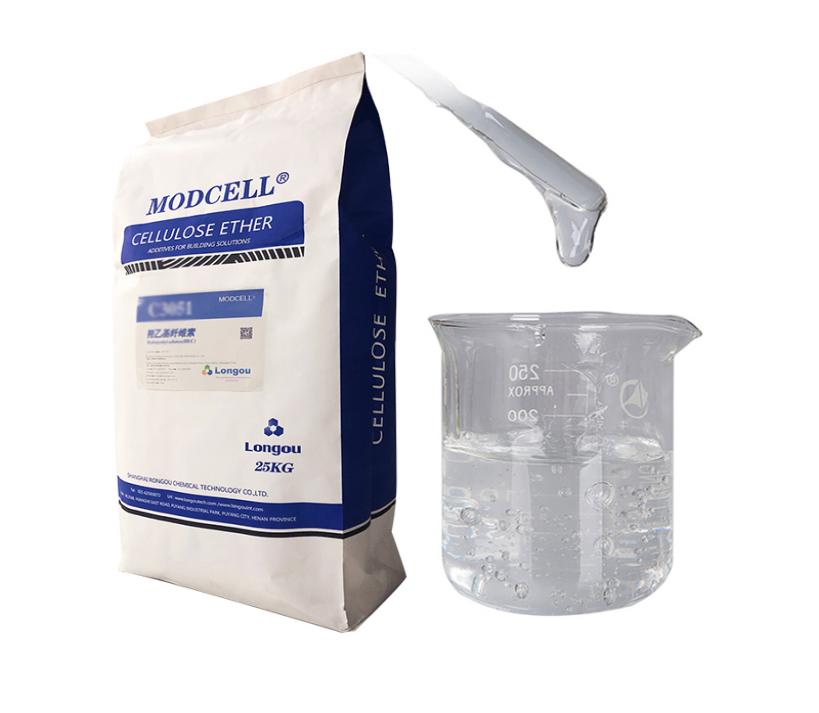
In modern construction engineering, people have placed higher demands on the stability, aesthetics, and durability of structures. Behind every smooth and firmly laid tile lies the synergistic effect of high-performance chemical additives. Among them,
hydroxypropyl methylcellulose (HPMC), as a core modifier in tile adhesive, plays a crucial role.
What is HPMC?
Hydroxypropyl methylcellulose is a multifunctional additive derived from the natural polymer cellulose. HPMC offers a wide range of product grades, each with its own unique properties, covering key indicators such as viscosity, degree of substitution, and particle size. These differentiated characteristics allow formulators to select the appropriate HPMC to meet the various specific application requirements of tile adhesive formulations.
The advantages of HPMC in tile adhesives
01
Water retention–the foundation of bond strength
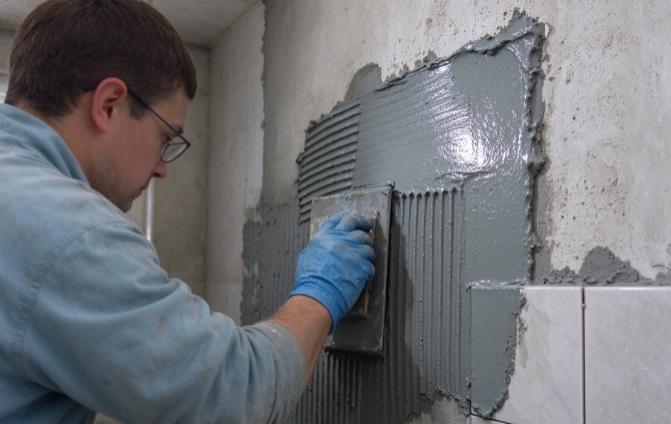
Cement hydration requires free water; premature water loss interrupts hydration and weakens bond strength. HPMC forms a hydrophilic network within the wet mortar, locking in and slowly releasing water to ensure full hydration at the interface between the mortar and the substrate/tile. During high-temperature summer construction, suitable HPMC can prevent premature skinning of the mortar surface without excessively delaying curing.
02
Opening hours–allow time for tile relocation
Open time represents the effective period after tile adhesive is applied, during which tiles can be adjusted. Ordinary mortar forms a skin quickly, leaving almost no room for adjustment. Compatible HPMC can extend the open time of C1/C2 tile adhesive to 20–30 minutes, making it easier for workers to adjust large-format tiles. However, simply increasing the amount of HPMC cannot extend the open time indefinitely; excessive addition can actually reduce early strength and increase the risk of cracking.
03
Anti-slip/Anti-sagging–Solving the problem of wall tile sagging
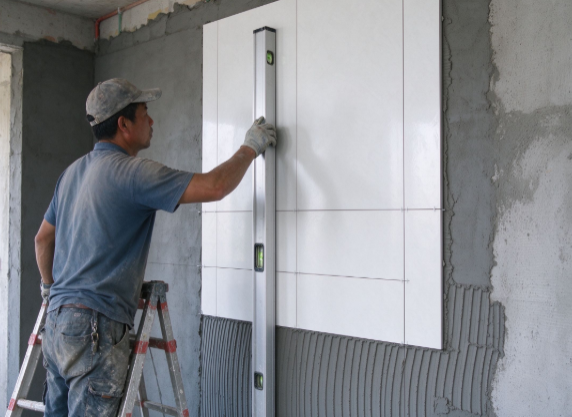
Heavy wall tiles are prone to slipping under gravity during installation, and the resulting cavities can lead to future detachment. Anti-slip T-index is a mandatory requirement for high-end wall tile adhesives. HPMC imparts thixotropic properties to the mortar: it applies smoothly and quickly rebuilds its structure to support the tiles after settling. Choosing the right adhesive requires balancing viscosity; too low a viscosity will cause tiles to slip, while too high a viscosity will make the mortar stiff and difficult to comb out with even texture.
04
Optimize construction
Bonding performance depends not only on chemical properties, but also on sufficient physical contact between the adhesive and the tile/substrate. Air bubbles and pores can become weak points where the adhesive will detach. HPMC acts as an internal lubricant, resulting in better powder dispersion, a finer adhesive, and thorough wetting of the contact surface, reducing air bubbles. However, HPMC cannot replace Redispersible Polymer Powder.
05
Stable curing ensures long-term adhesive durability.
Ordinary mortar has high drying shrinkage during curing, which easily leads to microcracks at the bonding interface. Moisture intrusion can cause debonding. HPMC balances the hydration rate, reduces drying shrinkage, minimizes interfacial microcracks, and maintains the integrity of the bonding interface.
Matching HPMC Performance Characteristics to Different Tile Laying Scenarios
HPMC selection needs to be based on performance requirements. Viscosity, particle size distribution, and degree of substitution determine material performance. Different laying scenarios have different requirements for the performance characteristics of HPMC:
1. Floor Tile Adhesive
Floor tiles bear long-term pedestrian traffic and static loads. HPMC with moderate water retention and balanced rheological properties should be prioritized.
2. Wall Tile Adhesive
Vertical wall construction relies heavily on thixotropic anti-slip properties. HPMC with outstanding thixotropy should be selected.
3. Exterior Wall Tile Adhesive
Outdoor applications must withstand UV and temperature fluctuations. HPMC with excellent high-temperature water retention is recommended.
4. Renovation Projects
For tile-on-tile, use HPMC with moderate water retention and controllable open time to obtain suitable slurry rheology.
Dosage Reference and Key Storage Precautions
We can provide operating guidelines to determine the optimal dosage, for example C1 ordinary tile adhesive 0.2-0.3%, C2 reinforced tile adhesive 0.3-0.4%(these values are for reference only). But higher dosage does not necessarily mean better results, excessive addition can cause delayed setting, increase the risk of drying shrinkage and cracking, and increase formulation costs.
HPMC powder is highly hygroscopic. Even with correct grade selection, improper storage often leads to batch performance instability. Please retain the original sealed packaging. Reseal immediately after opening. Store in a cool, dry, and well-ventilated warehouse with an ambient temperature controlled between 10-30℃ and relative humidity below 65%. Place goods on pallets, away from moisture on walls and floors, and avoid direct sunlight and high humidity areas. Shelf life is 24 months when sealed. It is recommended to use the product as soon as possible after opening to prevent the powder from absorbing moisture and clumping.
Excellent tile adhesion is determined by a combination of interrelated factors: water retention capacity, controllable open time, anti-slip rheology, interfacial wetting contact, and stable curing durability.
Choosing a suitable and stable HPMC grade directly improves finished product quality and market competitiveness. Longou’s MODCELL® series HPMC is specifically developed for tile adhesives and various dry-mix mortar systems, offering customized solutions for different climates, tile sizes, and European C1/C2/C2T/C2TE performance levels. Welcome to visit our official website product page(https://www.longouchem.com/), and contact our technical team for formulation support.